The Pricing Mistake That Could Cost You Your Sale in Lathrop, CA

The Pricing Mistake That Could Cost You Your Sale in Lathrop, CA
By David Torres | Broker Associate, Real Broker
A Lathrop homeowner can have a beautiful home, strong upgrades, a great location, and still make one mistake that changes everything.
It usually happens before the first showing.
Before the first open house.
Before the first buyer walks through the door.
It happens when the asking price is set too high.
Most sellers do not overprice because they are trying to sabotage their sale. They do it because they want to protect their equity. They remember what nearby homes sold for a few years ago. They hear stories from the market peak. They see online estimates. They think, “Let’s list high and see what happens.”
That sounds reasonable.
But in today’s market, that strategy can backfire quickly.
Buyers in Lathrop, CA and River Islands have more choices than they did during the most competitive years. They are still looking, but they are also more selective. They compare homes carefully. They watch days on market. They notice price reductions. And if a home feels overpriced compared to similar options, many buyers do not negotiate.
They move on.
That is why pricing correctly from day one matters so much.
The Gap Between What Sellers Expect and What Actually Happens
Most sellers enter the market with a number in mind.
That number is usually their asking price.
And according to a survey from Realtor.com, about 8 in 10 sellers, or 80%, expect to sell at or above their asking price today.
That confidence makes sense. Sellers want top dollar. Many homeowners have seen significant equity growth over the past several years. And if they watched homes sell quickly during the 2020 to mid-2022 market, it is understandable why they may still expect buyers to compete aggressively.
But here is where the disconnect happens.
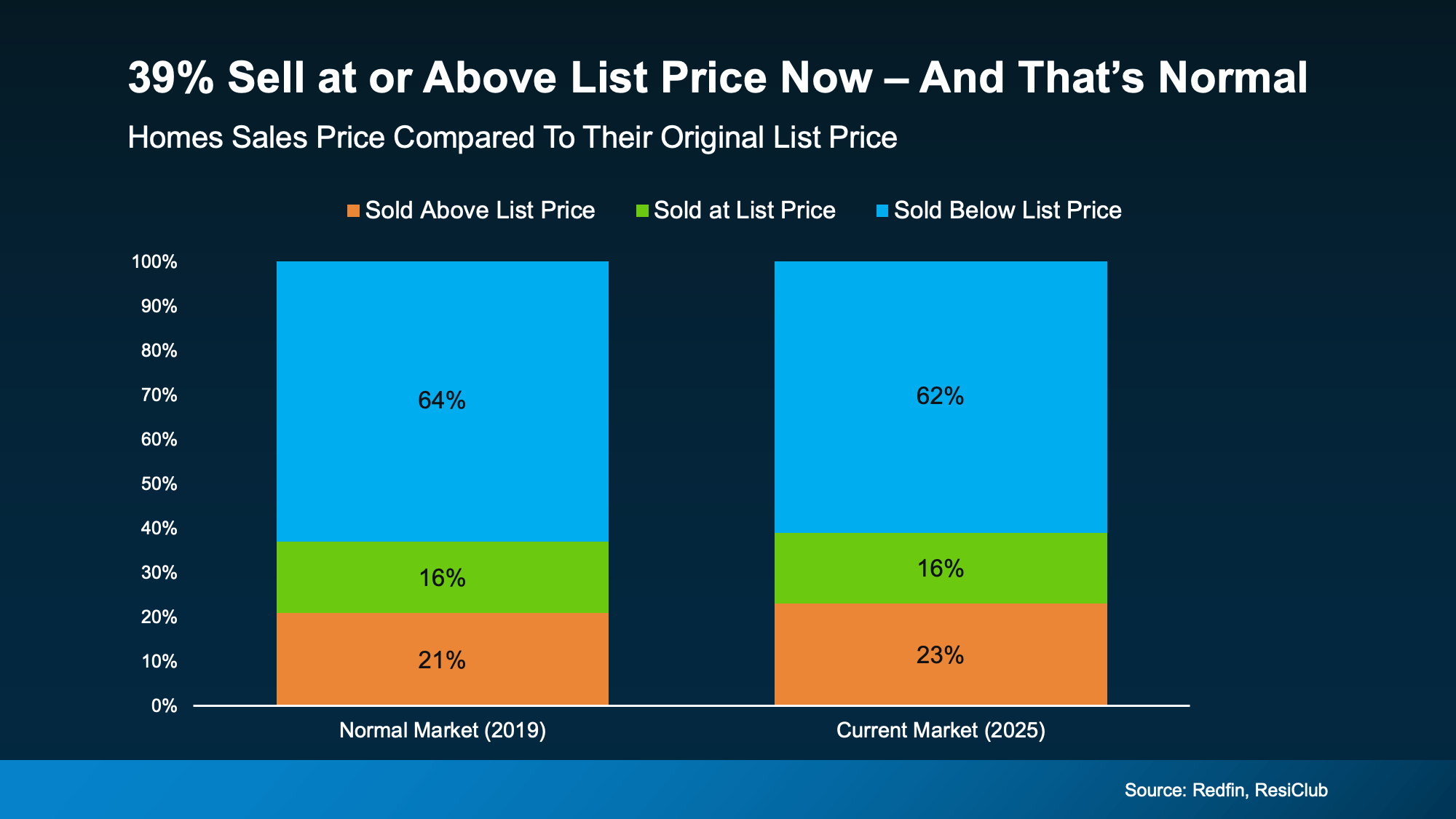
In reality, only about 4 out of every 10 sellers, or roughly 40%, actually sell at or above their asking price.
That is a major gap.
It means many sellers are coming into the market expecting one outcome, while the market is delivering something very different.
For Lathrop homeowners, that gap matters. If you are planning to sell in River Islands, Central Lathrop, Mossdale, or another part of the city, you cannot price based only on what you hope to get. You have to price based on what today’s buyers are actually willing to pay.
That does not mean giving your home away.
It means being strategic.
Is 40% Actually Low?
At first, hearing that only about 40% of sellers are getting their asking price or more may sound discouraging.
But it is not as unusual as it may seem.
If you compare today’s market to 2019, which was the last more typical year before the housing market became extremely unusual, what we are really seeing is more of a return to normal.
In fact, slightly more homeowners are able to sell above list price today compared to 2019.
The reason 40% feels low is because the market we experienced from 2020 to mid-2022 was not normal.
During that period, buyer demand was extremely high. Mortgage rates were lower. Inventory was historically tight. Homes were receiving multiple offers quickly. Buyers were waiving terms, moving fast, and often bidding above asking just to compete.
That market trained a lot of sellers to believe that almost every home should sell over asking.
But that was never going to be permanent.
Today, the market has shifted.
There are more homes for sale. Buyers have more options. Affordability is tighter. And buyers are more careful about what they are willing to pay.
That means sellers cannot rely on the same pricing strategy that worked during the peak market.
Pricing like it is still 2021 is one of the biggest mistakes a seller can make today.
What Happens When a Home Is Priced Too High?
A lot of sellers think pricing high gives them room to negotiate.
The logic sounds simple: list high, let buyers make offers, then negotiate down if needed.
But in today’s market, that is often not how buyers respond.
When a home is priced above what buyers expect, many buyers do not see it as an invitation to negotiate. They see it as a reason to skip the home entirely.
That is especially true when they have other options.
Buyers notice price first. Before they book a showing, before they walk through the home, before they fall in love with the kitchen or backyard, they are comparing the price to similar homes nearby.
If your home does not line up with the competition, it may not even make their showing list.
That is when the problem starts to snowball.
A high price usually leads to less buyer interest.
Less buyer interest leads to fewer showings.
Fewer showings lead to fewer offers.
Fewer offers lead to more time on the market.
More time on the market creates questions.
And once buyers start asking why a home has not sold, the listing can lose momentum.
This is one of the biggest risks of overpricing. You do not just risk missing the perfect buyer. You risk damaging the perception of the home.
In real estate, perception matters.
A fresh listing gets attention. Buyers want to see what is new. Agents are watching for strong opportunities for their clients. Online traffic is usually strongest when a home first hits the market.
But if a home launches too high and sits, that early attention fades.
Why Days on Market Can Work Against You
The longer a home sits, the more buyers begin to wonder what is wrong.
Sometimes nothing is wrong.
The home may be in good condition. The location may be strong. The layout may be functional. The photos may look great.
But if the price is off, buyers may still hesitate.
That hesitation becomes more serious over time.
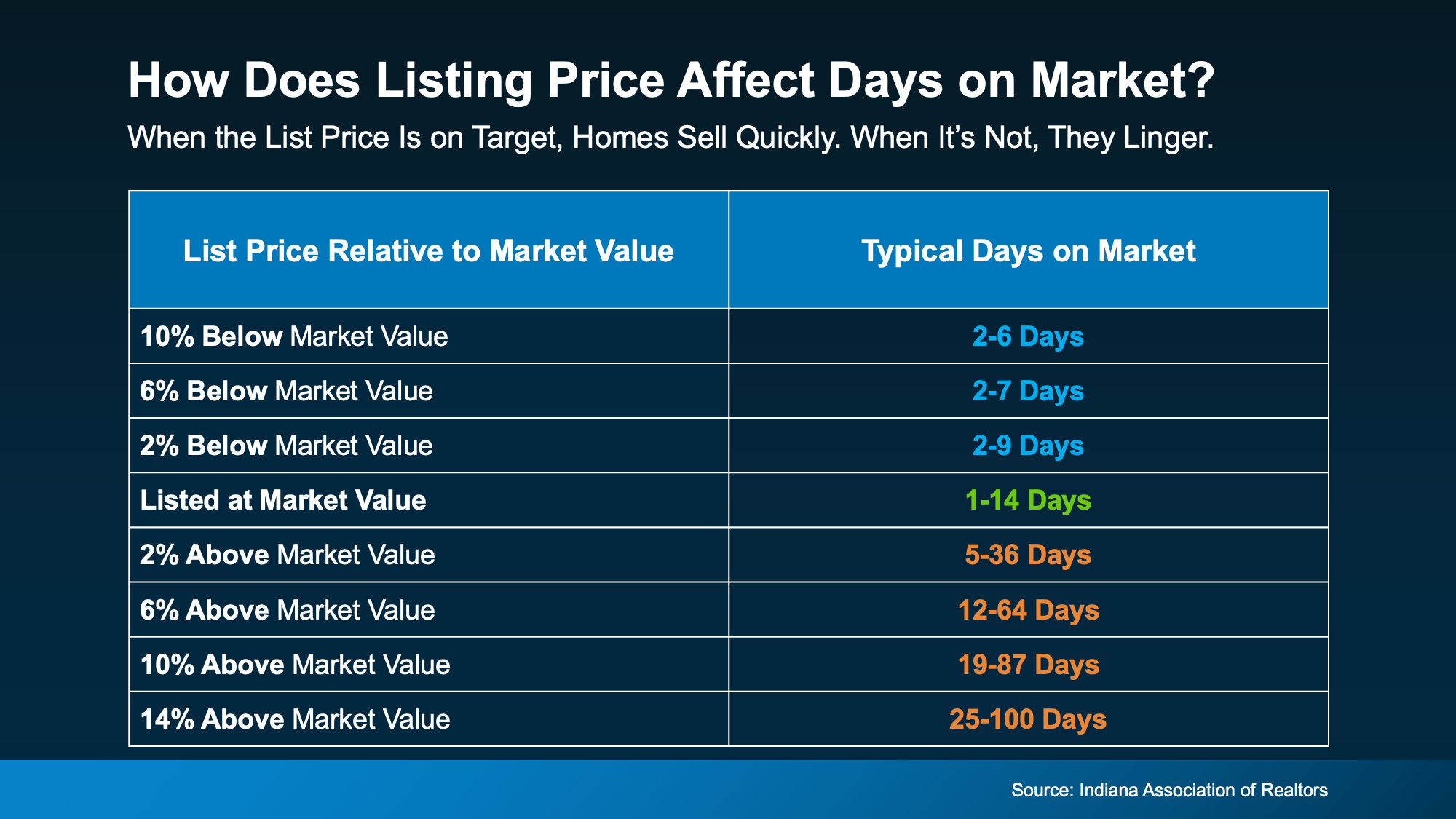
Data from the Indiana Association of Realtors shows a trend that applies broadly across many markets: homes listed at or under market value tend to sell faster, while homes priced too high tend to linger.
Even though that data is from one state, the principle is consistent in many real estate markets.
The market rewards homes that feel properly positioned.
It punishes homes that feel overpriced.
For sellers in Lathrop and River Islands, this is important because buyers are already comparing value across different options. A buyer may be looking at a resale home, a newer home, and possibly new construction at the same time. If one home feels overpriced, the buyer may quickly shift their attention to another property that feels like a better value.
That does not always mean the cheapest home wins.
It means the best-positioned home wins.
The Price Cut Trap
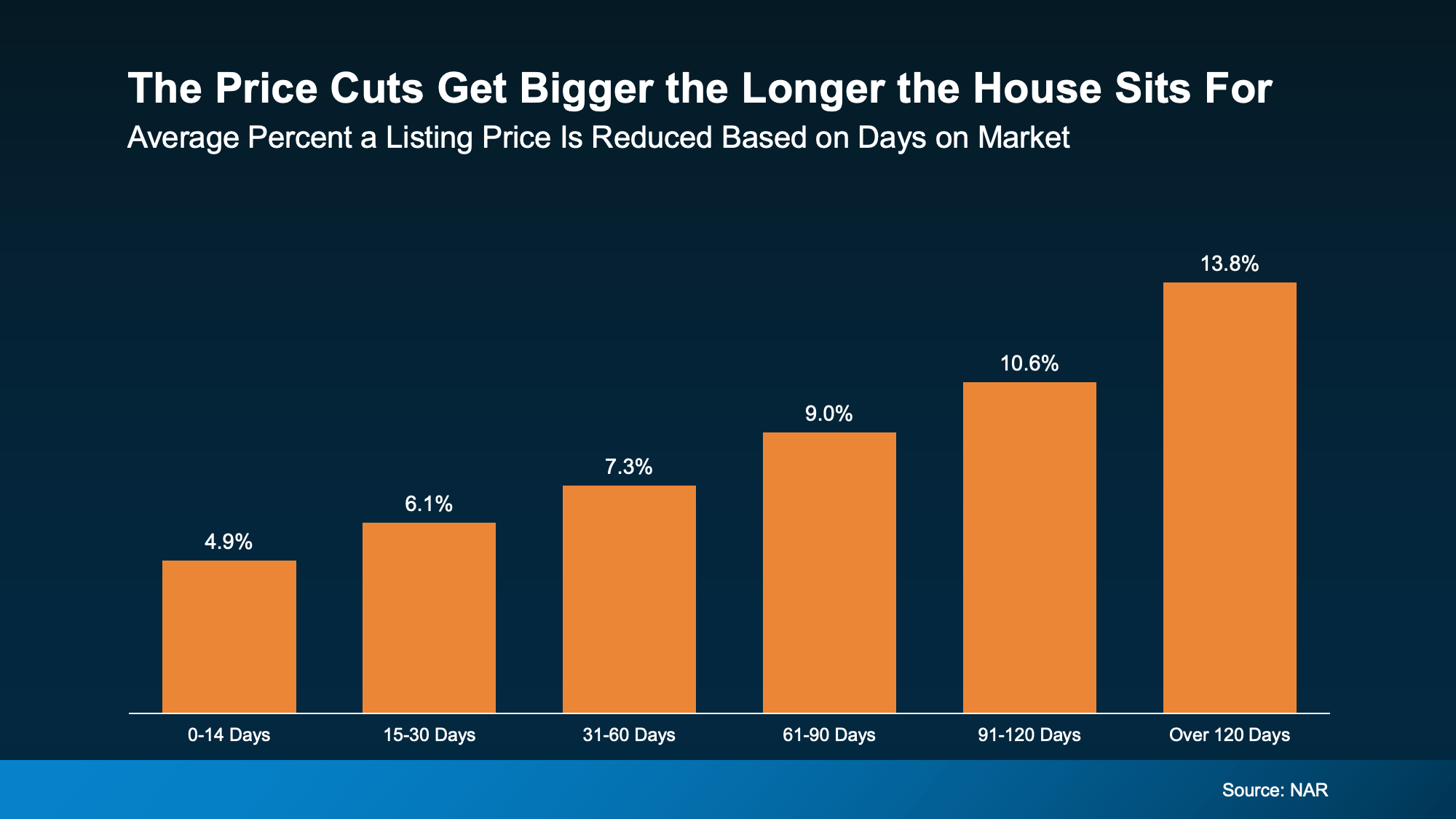
When a home sits without enough activity, many sellers eventually reduce the price.
According to Realtor.com, 16.7% of sellers are going that route today.
A price reduction can help in some situations. If a home is clearly overpriced, adjusting the price may be necessary to create new interest.
But here is the problem.
A price cut does not automatically fix the issue.
In fact, some buyers see a price reduction and assume something is wrong with the house, even when nothing is wrong at all.
They may wonder:
Why has it not sold?
Did inspections reveal something?
Is the seller getting desperate?
Can we offer even less?
Will there be another price reduction later?
That shift in buyer psychology is real.
The listing moves from “new opportunity” to “what is the catch?”
That is a tough position for a seller.
And according to data from the National Association of Realtors, the longer a home sits, the bigger the price cut often needs to be to attract buyers back.
That is why the “list high and reduce later” strategy can cost more than sellers expect.
What starts as a plan to leave room for negotiation can turn into a longer sale, weaker buyer perception, and a lower final price.
Why Pricing Right From Day One Matters
Pricing your home correctly from the beginning can feel counterintuitive.
A lot of sellers think, “If I want the most money, shouldn’t I start high?”
Not always.
The goal is not just to list your home. The goal is to create demand.
A strong pricing strategy is designed to make buyers pay attention immediately. It should position your home as one of the best options in its category, not as a listing buyers save for later in case the price drops.
That is where the right pricing strategy becomes powerful.
If your home is priced correctly, you can create more interest, more showings, and potentially stronger offers. If multiple buyers see value, competition can build. And when competition builds, sellers are often in a much stronger position.
The National Association of Realtors puts it well:
“While some sellers are pricing their homes higher than ever, a more ‘goldilocks’ frame of mind is a better approach to avoid price cuts and lingering time on the market.”
That is the sweet spot.
Too high, and buyers disappear.
Too low, and buyers may question the value.
Priced right, and your home has the best chance to create demand.
That is where strategy matters.
What “Market Value” Really Means
Market value is not what a seller wants.
It is not what a neighbor says the home is worth.
It is not always what an online estimate suggests.
Market value is what a qualified buyer is willing to pay in today’s conditions based on the home’s location, condition, features, competition, and recent comparable sales.
That last part matters.
Today’s value is shaped by today’s buyers.
If buyers have more inventory to choose from, they may be less aggressive. If interest rates are affecting affordability, buyers may be more payment-sensitive. If similar homes are sitting, buyers may feel less urgency. If a competing home is priced more attractively, that listing may pull attention away from yours.
In Lathrop, pricing also depends on the property type and location.
A home in River Islands may be evaluated differently than a home in another part of Lathrop because buyers may weigh lifestyle, amenities, school access, newer construction, lot size, tax considerations, and overall community appeal.
But even in a desirable community, price still matters.
No neighborhood is completely immune to buyer behavior.
Why Sellers Need Local Pricing Strategy
National headlines can give you a general sense of the market, but they cannot price your home.
A home in Lathrop needs a local strategy.
That means looking at:
- recent comparable sales
- active competition
- pending listings
- days on market
- price reductions
- buyer demand by price point
- condition and upgrades
- location within the community
- new construction competition
- current buyer expectations
This is especially important in a market that is no longer moving like the peak years.
During the hottest market, some sellers could make mistakes and still win. Low inventory covered up a lot of pricing problems. Buyers had fewer options, so they were often forced to compete anyway.
That is not the same environment many sellers are in now.
Today, the market is more selective.
That does not mean sellers cannot do well. It means they need to be sharper.
The right price can help your home stand out immediately. The wrong price can make buyers question it before they ever see it in person.
The Difference Between Testing the Market and Chasing the Market
One of the most expensive mistakes sellers make is confusing “testing the market” with having a strategy.
Testing the market usually sounds like this:
“Let’s list high and see what happens.”
The problem is that the market does not wait politely while you test it.
The first few weeks matter. That is when your listing is fresh. That is when buyers are paying attention. That is when agents are sending it to clients. That is when your online exposure is likely to be strongest.
If the price is too high during that critical window, you may miss the best opportunity to create momentum.
Then, if you reduce the price later, you are trying to regain attention that may already be gone.
That is called chasing the market.
And chasing the market is rarely ideal.
Instead of creating demand from day one, the seller is reacting after the market has already spoken. By then, buyers may feel more confident negotiating. They may wonder why the home is still available. They may wait to see if another reduction comes.
That is not the strongest position for a seller.
How To Price a Home To Win in Today’s Market
A strong pricing strategy starts with honesty.
Not harshness.
Not lowball thinking.
Not fear.
Just honest interpretation of the market.
If you want to sell your home in Lathrop or River Islands, you need to know where your home fits compared to the competition.
That means asking:
- What are similar homes actually selling for?
- How long did those homes take to sell?
- Were there price reductions before they sold?
- How does my home compare in condition?
- How does my location compare?
- What is currently active that buyers will compare against my home?
- Are buyers in my price range moving quickly or slowly?
- What would make my home the obvious choice?
These questions help you avoid emotional pricing and move toward strategic pricing.
The goal is not to be the cheapest home. The goal is to be the home that makes the most sense to serious buyers.
What Sellers in River Islands Should Pay Attention To
For River Islands sellers, pricing requires even more attention to detail because buyers are not just comparing bedrooms and square footage.
They may also be comparing:
- builder
- floor plan
- age of home
- lot location
- proximity to parks, lakes, trails, and schools
- upgrades
- landscaping
- solar structure
- tax considerations
- resale versus new construction options
- overall lifestyle appeal
If there are new construction incentives available nearby, that can also affect how buyers view resale homes. A resale home may need to compete not only with other resale listings but also with builder pricing, incentives, and available inventory.
That does not mean resale sellers are at a disadvantage.
In many cases, resale homes offer finished yards, window coverings, established upgrades, completed landscaping, and a move-in-ready feel that new construction may not include at the same level.
But those advantages need to be priced and marketed correctly.
If the price is too high, buyers may not give the home enough attention to appreciate those benefits.
The Right Agent Helps You Avoid the Costly Mistake
Pricing is not just picking a number.
It is positioning.
A strong agent helps you understand what buyers are actually paying right now, how your home compares, and how to launch the listing in a way that creates attention from the start.
That includes more than the list price.
It includes presentation, timing, marketing, photography, buyer targeting, showing strategy, and negotiation.
But pricing is the foundation.
If the price is wrong, everything else has to work harder.
Great photos cannot fully overcome a bad price.
Strong marketing cannot force buyers to ignore better values.
A desirable neighborhood cannot completely erase buyer hesitation.
The right pricing strategy gives the rest of the marketing a chance to work.
Bottom Line
A lot of homeowners think they can list high now and negotiate later.
In today’s market, that can be an expensive mistake.
According to Realtor.com, about 80% of sellers expect to sell at or above their asking price, but only about 40% actually do. That gap is where many sellers get caught off guard.
If you want to be in the group that gets top dollar, it starts with pricing correctly from day one.
That does not mean underpricing your home. It means positioning it where serious buyers see value, take action, and feel motivated to compete.
If you are thinking about selling in Lathrop, CA or River Islands, let’s talk through the numbers, the competition, and the right pricing strategy for your home before you hit the market.
The right price can create momentum.
The wrong price can cost you the sale.
About the Author
David Torres is a Broker Associate at Real Broker serving Lathrop, CA and River Islands. He helps buyers and sellers navigate the market with local expertise, strategy, and straightforward guidance tailored to their goals. Source KCM
Categories
Recent Posts