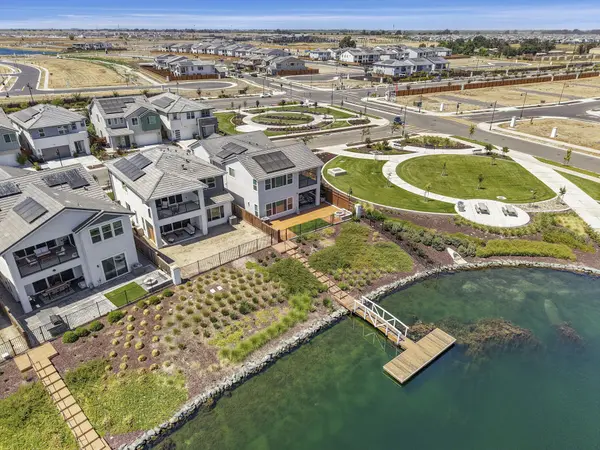
Your Lathrop Home didn't sell. Here's how to turn it around...

Your Lathrop Home Didn’t Sell. Here’s How To Turn It Around
By David Torres | Broker Associate, Real Broker
When a home does not sell, the disappointment goes far beyond the listing expiring.
It affects your timing.
Your plans.
Your confidence.
Maybe you were counting on the sale to buy your next home. Maybe you were preparing to relocate, downsize, move closer to family, or make a fresh start.
Instead, the listing sat.
Showings slowed down.
Offers never came.
Or maybe a deal started and then fell apart before closing.
At that point, many sellers begin questioning everything.
Was the market the problem?
Was the price wrong?
Did buyers simply not like the house?
Is it even worth trying again?
The good news is that an unsuccessful first attempt does not mean your home cannot sell.
It usually means the first strategy did not create the right result.
That distinction matters.
If your house did not sell in Lathrop, CA or River Islands, the answer is rarely to put it back on the market with the same price, the same presentation, and the same plan.
The better move is to identify what went wrong, correct it, and relaunch with a stronger strategy.
Different Agent. Different Results.
Most homeowners who relist and ultimately sell do not wait around hoping the market suddenly changes.
They change their approach.
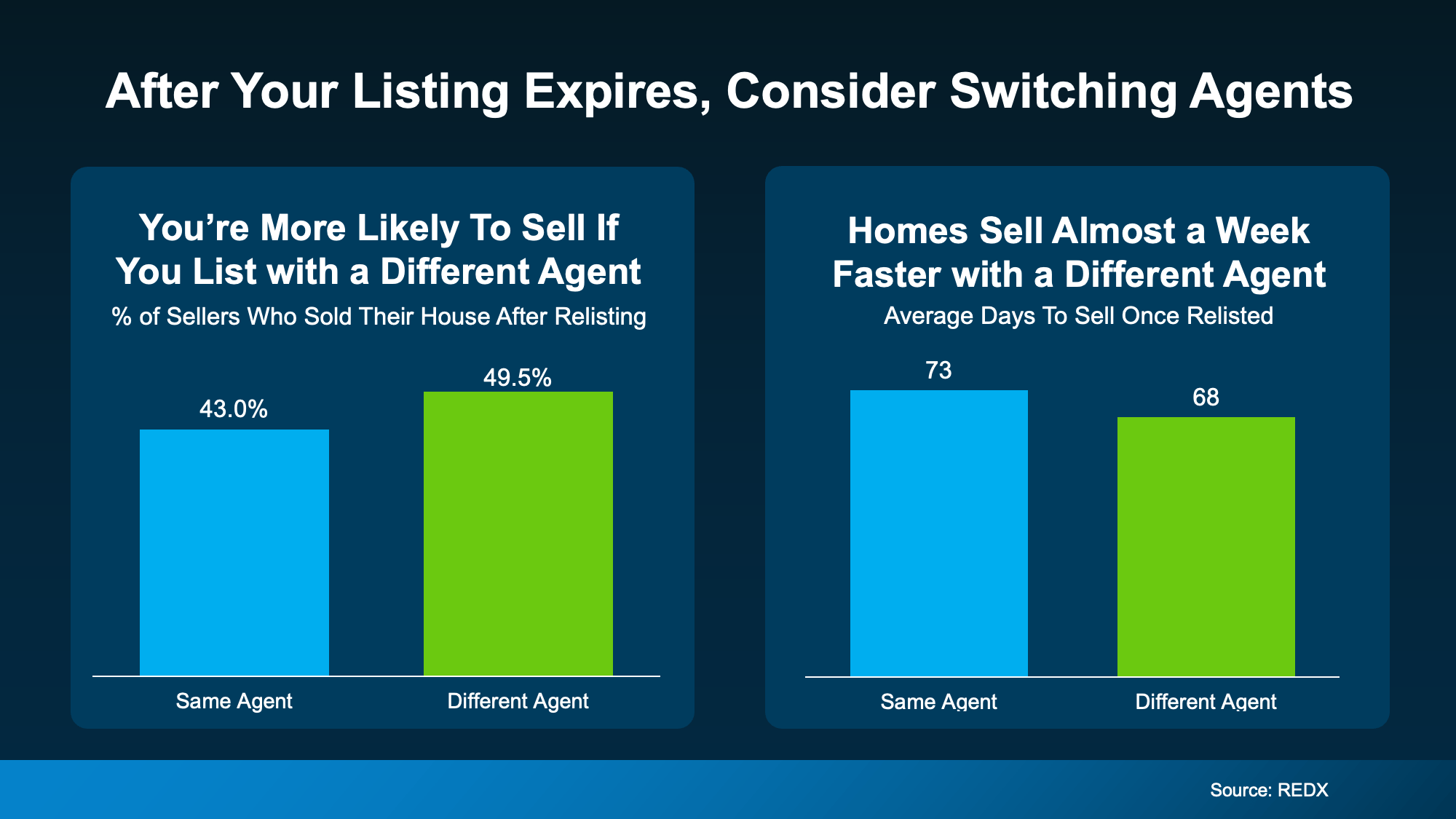
Research from REDX shows that homeowners who put their property back on the market with a different agent are more likely to sell than sellers who reuse the same agent. The data also shows those homes tend to sell faster.
That does not mean every expired listing failed because the agent did nothing.
Markets change. Buyers shift. Interest rates move. Personal circumstances can interfere. Sometimes a home simply misses the right buyer during the first listing period.
But when a home does not sell, a fresh set of eyes can be valuable.
A new agent may identify problems that were overlooked the first time. They may see that the home was positioned incorrectly, the pricing was out of alignment, the marketing failed to connect, or the seller never received useful feedback.
What matters most is avoiding the temptation to repeat the same process and expect a different outcome.
A successful relaunch should not feel like a continuation of the old listing.
It should feel like a reset.
1. The Asking Price Did Not Match Buyer Reality
One of the most common reasons a home does not sell is also one of the hardest for sellers to hear.
The price was too high for the market.
There is a saying that applies especially well today:
If the price is not compelling, the home is not selling.
That does not mean buyers disliked the home. It does not mean the property lacked value. It means the asking price did not create enough urgency compared to the other choices available.
Buyers today are extremely payment-conscious.
Mortgage rates, insurance, property taxes, maintenance, and the higher cost of everyday living all affect what a buyer can comfortably afford. Even buyers who qualify for more may be unwilling to stretch if they believe a home is overpriced.
And when buyers have more options, they usually do not spend much time negotiating with a listing that feels too high.
They skip it.
That is what makes overpricing so dangerous.
A seller may think the higher price creates room to negotiate. But buyers may never make it far enough to start that negotiation.
If the home does not show up as a strong value online, it may not make the showing list at all.
The Fix
The asking price should be based on what buyers are paying now, not what the seller hopes to receive or what a neighbor sold for during a stronger market.
Before relisting, your agent should review:
- recent comparable sales
- currently active competition
- pending homes
- price reductions
- days on market
- condition and upgrades
- lot location
- buyer activity within your price range
- new construction competition, when relevant
For a home in River Islands, this may also include comparing builders, floor plans, school proximity, park or lake locations, yard completion, solar terms, upgrades, and how nearby new construction is being priced.
The goal is not to underprice the home.
The goal is to create enough value that buyers feel compelled to act.
2. The First Impression Did Not Win the Click
Most buyers see your home online before they ever see it in person.
That first impression may last only a few seconds.
They look at the main photo.
They scan the price.
They swipe through the first few images.
Then they decide whether to keep looking or move on.
If the photos are dark, dated, cluttered, poorly framed, or inconsistent, buyers may never schedule a showing.
Sellers often say:
“If buyers would just come see it in person, they would understand.”
But the online presentation is what earns the in-person visit.
And even when buyers do tour the home, smaller issues can begin stacking up.
Worn paint.
Dim lighting.
Overgrown landscaping.
Too much furniture.
Visible deferred maintenance.
Outdated fixtures.
Personal items everywhere.
One issue may not matter much. But when buyers notice several at once, doubt starts building.
They may begin estimating repairs. They may question whether the home has been maintained. They may compare it to another listing that feels cleaner, brighter, or easier to move into.
The Fix
Before relisting, walk through the property as if you are seeing it for the first time.
Better yet, have someone who is not emotionally attached to the home walk it with you.
Start with the improvements that have the biggest visual impact:
- fresh paint
- improved lighting
- decluttering
- furniture editing
- curb appeal
- landscaping cleanup
- small repairs
- updated fixtures where needed
- deep cleaning
Then replace the original photography.
A relisted home should not return to the market looking exactly the same as it did before.
New photography helps signal that something has changed.
The goal is to present the best version of the home without making buyers feel misled once they arrive.
3. The Marketing Was Too Passive
In a market with more inventory, simply placing a home in the MLS is not a complete marketing strategy.
That is the baseline.
Buyers have more listings competing for their attention. A generic property description, basic photography, and a sign in the yard may not be enough to make a home stand out.
Your listing needs a reason for buyers to stop scrolling.
That means the marketing should communicate more than square footage and bedroom count.
It should explain why the home matters.
What makes the location valuable?
What lifestyle does the property support?
Which features solve real buyer needs?
What separates it from competing homes?
For a property in River Islands, the story could involve proximity to parks, lakes, trails, schools, community amenities, newer construction, open-concept living, or a floor plan that works especially well for multigenerational living or growing families.
For another Lathrop home, the value may be yard space, commuter access, neighborhood location, lower maintenance, or affordability compared to newer communities.
The marketing needs to identify that value and make it easy for buyers to understand.
The Fix
A stronger relaunch should include a coordinated marketing plan, which may involve:
- professional photography
- video walkthroughs
- short-form social media content
- property-specific digital advertising
- stronger listing copy
- email marketing
- broker and agent outreach
- open houses
- buyer follow-up
- consistent online promotion
- local community positioning
The point is not to use every marketing tactic just to say it was done.
The point is to create multiple opportunities for the right buyer to discover the home and understand why it is worth seeing.
A listing should be actively marketed, not simply uploaded and monitored.
4. There Was No Clear Plan for Feedback
Sometimes a home gets showings but no offers.
That is frustrating, but it is also valuable information.
If buyers were willing to visit the property, the online presentation and price were strong enough to generate initial interest.
Something changed during or after the showing.
Maybe the layout felt different in person.
Maybe the condition did not match the photos.
Maybe buyers thought the yard required too much work.
Maybe the price felt high after touring the competing homes.
Maybe one specific issue kept appearing in the feedback.
Those buyers were communicating something.
The problem is that many sellers never receive enough useful feedback to identify the pattern.
A vague comment such as “The buyers went in another direction” does not help a seller make a better decision.
A strong feedback process should look for recurring themes.
The Fix
Your agent should have a consistent system for requesting, organizing, and interpreting showing feedback.
That means looking beyond one opinion.
One buyer may dislike a feature that another buyer loves. But if five buyers mention the same concern, that issue deserves attention.
Feedback may reveal the need to:
- adjust the price
- repair a visible defect
- improve lighting
- change staging
- address odors
- clarify a property feature
- improve landscaping
- update marketing language
- reposition the home against its competition
The key is speed.
Feedback is most useful when it is acted on while the listing still has momentum.
Waiting several weeks to respond can allow the market to form a negative opinion before the seller makes the necessary adjustment.
5. The Deal Could Not Get Across the Finish Line
Sometimes the home did attract an offer.
Maybe it even went under contract.
But then the deal fell apart.
A failed transaction can happen for many reasons, including financing, inspections, appraisal, buyer uncertainty, title issues, or disagreements during negotiations.
Not every failed deal can be prevented.
But some fall apart because there was no clear plan for managing the human side of the transaction.
Today’s buyers are more likely to ask for repairs, credits, rate buy-down assistance, or help with closing costs than buyers were during the most competitive years.
That does not automatically mean the buyer is unreasonable.
It means the market is more negotiable.
Sellers who refuse to consider any concession may lose a qualified buyer and return to the market with additional days on market and a failed-sale history.
In some situations, a reasonable credit may cost less than relisting, carrying the home longer, and eventually accepting a lower offer.
The Fix
Before accepting an offer, decide which terms matter most.
Is the priority:
- the highest price
- a faster close
- fewer contingencies
- certainty
- flexibility with possession
- limited repairs
- a stronger appraisal position
Knowing your priorities makes negotiations more productive.
Your agent should also help you evaluate the actual cost of each request rather than reacting emotionally.
A buyer asking for a credit does not necessarily mean the deal is bad. A seller agreeing to a concession does not automatically mean they lost.
The goal is to protect the seller’s bottom line while keeping a strong transaction moving toward closing.
Quick Answer: What Should You Do if Your House Did Not Sell?
If your house did not sell, do not immediately relist it with the same price, presentation, and marketing plan. Review the asking price, buyer feedback, property condition, photography, marketing strategy, and any issues that affected negotiations. Sellers in Lathrop and River Islands may improve their results by relaunching with fresh market data, stronger presentation, a more active marketing plan, and an agent who can identify what prevented the first sale.
Why an Expired Listing Needs a Complete Reset
One of the biggest mistakes an expired seller can make is treating the relaunch like a simple extension.
A home that sat on the market has already developed a history.
Buyers and agents may remember it. They may have saved it online. They may have watched the price. They may already have an opinion about why it did not sell.
That means the second launch needs to answer an unspoken question:
What is different now?
The answer should be visible.
Maybe the price has been corrected.
Maybe the home has been refreshed.
Maybe the photography has been replaced.
Maybe repairs were completed.
Maybe the marketing is stronger.
Maybe the seller is now open to terms that were not previously considered.
Something should signal that this is not the same listing being recycled.
A true relaunch creates a new reason for buyers to pay attention.
What Lathrop,CA and River Islands Sellers Should Review Before Relisting
Before putting your home back on the market, review the entire first attempt honestly.
Ask:
- Was the home priced according to current data?
- How many showings did it receive?
- What feedback came up repeatedly?
- Did the photography compare well with competing listings?
- Was the home actively promoted after the first week?
- Did the listing description communicate the property’s strongest value?
- Were showing requests easy to accommodate?
- Were there offers that could have been negotiated differently?
- Did buyers compare the home against new construction?
- Did the strategy change when the market gave new information?
These questions are not about assigning blame.
They are about finding the point of failure.
Once that point is clear, the second strategy becomes much stronger.
Why Local Market Knowledge Matters
A national housing trend cannot tell you why a specific home in Lathrop did not sell.
Real estate is local.
A River Islands home may compete with newer resale listings, builder inventory, incentives, completed backyards, different tax structures, and homes with similar floor plans.
A property elsewhere in Lathrop may compete based on price, lot size, commute access, age, upgrades, and neighborhood condition.
That is why pricing and marketing need to reflect the exact buyer pool for the property.
The right agent should understand not only what has sold, but why certain homes are selling and others are not.
That difference is where strategy lives.
Bottom Line
If your house did not sell the first time, you are not stuck.
But you probably do need a different plan.
The first listing may have missed the market on price. The presentation may not have earned enough clicks. The marketing may have been too passive. Buyer feedback may not have been used. Or a negotiation may have broken down when there was still a path forward.
The solution is not to repeat the same process and hope for a better result.
It is to relaunch with fresh data, stronger positioning, better presentation, active marketing, and a clear plan from the first day back on the market.
If your home in Lathrop, CA or River Islands did not sell, I can help you review what happened, identify the biggest obstacle, and determine what should change before you try again.
A failed first listing does not have to define the outcome.
The right second strategy can turn it around.
About the Author
David Torres is a Broker Associate at Real Broker serving Lathrop, CA and River Islands. He helps homeowners understand why properties sell, why some listings stall, and how to position a home for a stronger result in today’s market.
Categories
Recent Posts