Are Home Prices Going To Fall in Lathrop, CA?
Are Home Prices Going To Fall in Lathrop, CA?
By David Torres | Broker Associate, Real Broker
After a showing in Lathrop, one buyer asked a question that a lot of people are quietly thinking right now.
“What if we buy, and then home prices drop?”
That is a fair question.
Buying a home is a major financial decision. And when you see headlines about mortgage rates, affordability, inventory, price reductions, or certain markets cooling, it is natural to pause and wonder if waiting would be safer.
But here is the part that often gets missed.
You do not want to build your entire real estate plan around a few short-term headlines or a handful of markets seeing slight declines. Real estate moves differently from city to city, neighborhood to neighborhood, and even price point to price point.
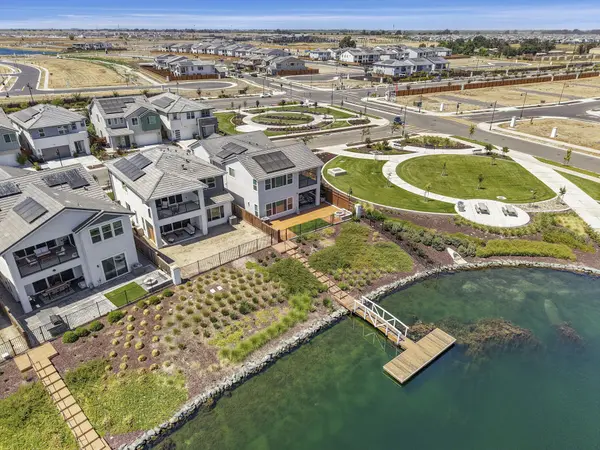
That matters in a place like Lathrop, CA, where buyers may be comparing resale homes, newer homes, and properties in master-planned communities like River Islands.
The real question is not just, “Will prices fall?”
The better question is:
What does history show, what is happening locally, and how long do you plan to own the home?
Because when you zoom out, the bigger picture becomes much clearer.
Home prices have a long history of rising over time.
Why Buyers Are Worried About Home Prices Right Now
For many buyers, especially first-time buyers, the fear is not just about today’s payment.
It is about timing.
No one wants to feel like they bought at the wrong moment. No one wants to purchase a home and then see values soften right after closing. That concern can make buyers hesitate, even when they are financially ready and have a real reason to move.
And honestly, that concern makes sense.
A home is not like a small purchase you can casually return. It is a long-term financial commitment. It affects your monthly budget, your lifestyle, your family, and your future plans.
But fear can become expensive when it is based only on short-term noise.
Some buyers wait because they assume prices are about to crash. Others wait because they think they will be able to buy the same home later for significantly less. Sometimes that happens in certain markets for certain properties, but historically, broad home price declines have not been the normal pattern.
That is where the data matters.
What the Long-Term Data Really Shows
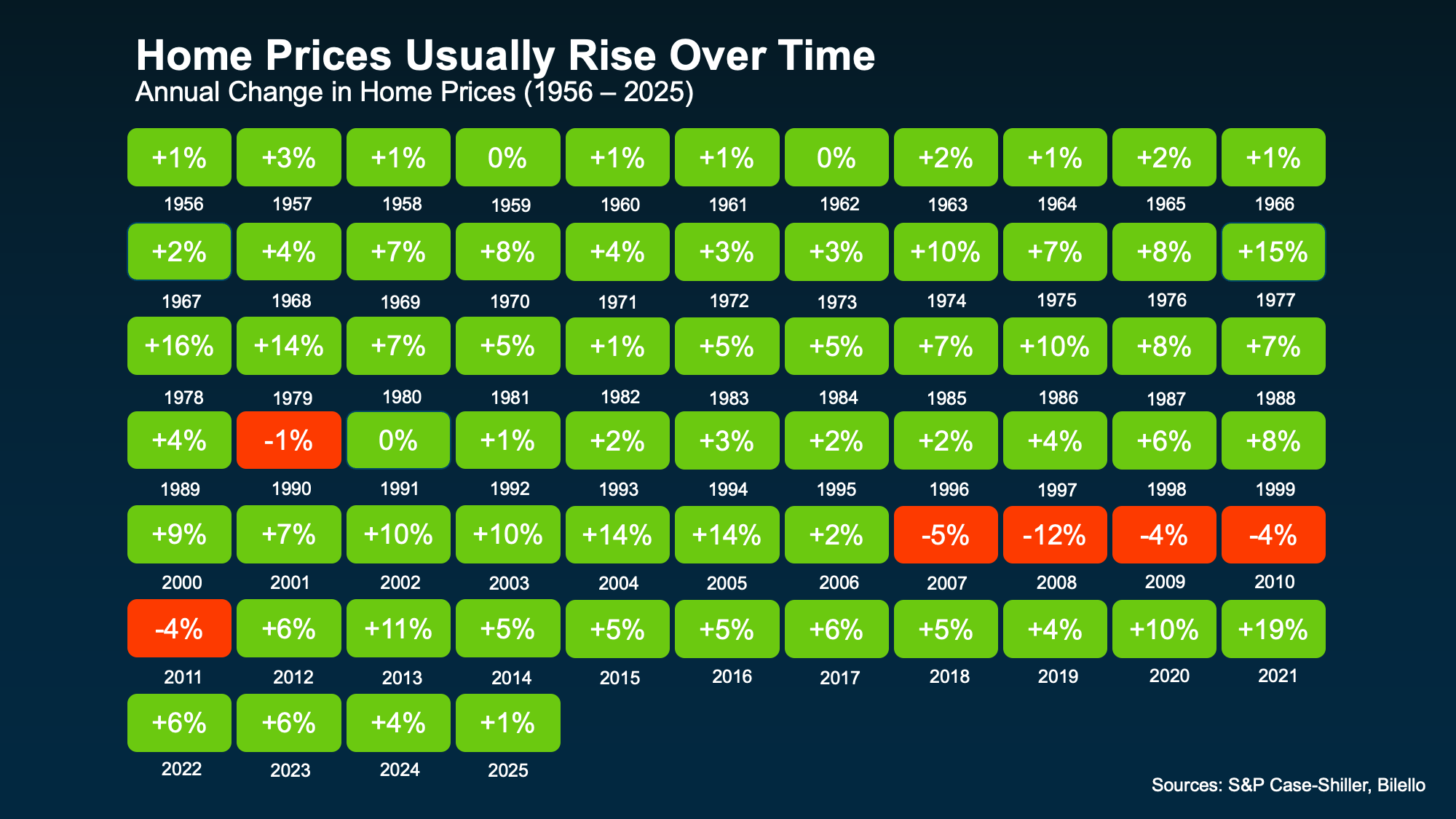
When you look at historical home price data from sources like Case-Shiller and Bilello going back to the 1950s, the long-term pattern is remarkably consistent.
Outside of the housing crash, home prices have either held steady or increased in just about every year for decades.
That does not mean prices rise every single month.
That does not mean every city performs the same.
That does not mean every neighborhood is protected from short-term price adjustments.
But the long-term trend is clear.
Historically, home prices usually rise over time.
That is the part many headlines fail to explain. Headlines are often written around what is happening right now, because short-term changes get attention. But real estate wealth is usually built over years, not weeks.
For buyers in Lathrop or River Islands, that perspective matters. If you are trying to time the exact bottom of the market, you may spend months or years waiting for a perfect moment that may never clearly announce itself.
And while you wait, the market keeps moving.
Why Home Prices Tend To Rise Over Time
There are a few core reasons home prices usually increase over the long run.
1. People Will Always Need a Place To Live
Housing is not optional.
People need a place to live. That demand never fully disappears. It can rise or fall depending on rates, affordability, economic conditions, and consumer confidence, but the need for housing remains.
People move because of:
- marriage
- divorce
- job changes
- growing families
- downsizing
- retirement
- relocation
- lifestyle changes
- school needs
- financial changes
Those life events keep the housing market moving.
In Lathrop, this is especially relevant because many buyers are looking for more space, newer homes, community amenities, or a location that gives them access to both the Central Valley and Bay Area employment corridors.
That ongoing demand supports home values over time.
2. There Still Are Not Enough Homes for Sale Nationally
Inventory has improved in many areas, and buyers may have more choices today than they had during the most competitive years.
But nationally, there is still an undersupply of homes based on the number of people who want to buy.
That lack of supply helps put upward pressure on home prices.
This does not mean every listing sells immediately. It does not mean every seller can overprice and still win. It also does not mean buyers have no negotiating power.
But when the broader market does not have enough housing to meet demand, prices tend to be supported over time.
That is one of the reasons buyers should be careful about assuming a major price drop is guaranteed.
3. Inflation Pushes Values Higher Over Time
Over time, the cost of goods and services generally rises. Housing is part of that bigger economic picture.
Land, labor, materials, insurance, construction, and development costs all play a role in the cost of housing. As those costs increase over time, home values tend to rise as well.
That is one of the reasons the same home that felt expensive years ago can look like a smart purchase in hindsight.
Buyers often think, “I wish I bought back then.”
But at the time, those buyers may have had the same fears people have today.
What This Means if You Are Buying in Lathrop or River Islands
If you are buying a home in Lathrop, CA, the goal should not be to predict the market perfectly.
The goal should be to make a smart decision based on your life, your finances, your timeline, and the specific home you are considering.
That is a different conversation.
Instead of asking only, “Will prices fall?” ask:
- Can I comfortably afford the monthly payment?
- Do I plan to own the home long enough to benefit from long-term appreciation?
- Does this home fit my lifestyle and future plans?
- Is the home priced fairly for the current Lathrop market?
- How does this property compare to other homes for sale in the area?
- Am I buying in a neighborhood or community with long-term appeal?
- What happens if prices stay flat for a short period?
- What happens if rates change later?
Those questions lead to better decisions.
In communities like River Islands, buyers are often looking beyond the house itself. They are thinking about lifestyle, schools, neighborhood feel, future resale appeal, newer construction, amenities, and long-term community growth.
Those factors matter.
But they still need to be paired with a clear understanding of price, payment, negotiation, and timing.
Should You Wait for Home Prices To Drop?
This is one of the most common questions buyers are asking right now.
Are home prices going to fall in Lathrop, CA?
Home prices can move up or down in the short term, and real estate is always local. Some markets may see slight declines or price adjustments, especially if homes are overpriced or buyer demand softens. But historically, home prices have usually risen over time. For buyers in Lathrop, CA, the better question is whether the home fits your budget, timeline, and long-term plans, rather than trying to perfectly time the market.
That is the real answer.
Could a specific home reduce its price? Yes.
Could certain price points soften? Yes.
Could some sellers become more negotiable? Yes.
But does that mean every buyer should sit on the sidelines waiting for a major drop? Not necessarily.
The problem with waiting for a price drop is that you are making a bet on multiple things happening in your favor at the same time.
You are betting that:
- prices will fall enough to matter
- the home you want will still be available
- interest rates will not offset the savings
- competition will not increase again
- your personal situation will stay the same
- your buying power will improve, not shrink
That is a lot to get right.
Sometimes waiting is smart. But waiting should be based on your financial readiness and personal timeline, not just fear.
Why the Five-Year Rule Matters
A key part of this conversation is how long you plan to stay in the home.
It is generally recommended that buyers purchase a home only if they plan to stay for a while, often at least five years.
Why?
Because a longer timeline gives you a better chance to ride out short-term market changes.
If prices dip slightly after you buy but you plan to stay long term, that short-term movement may not matter much. Over time, the historical trend of appreciation has often helped homeowners build equity and increase net worth.
But if you plan to sell again quickly, short-term price movement matters a lot more.
That is why your timeline should be part of the strategy.
A buyer who plans to live in the home for seven to ten years is in a very different position than someone who may need to move in one or two years.
In Lathrop, I would want to understand your full picture before telling you whether buying now makes sense. Your job stability, family plans, commute, budget, desired neighborhood, and long-term goals all matter.
Real estate is not just about the market.
It is about how the market fits your life.
The Risk of Trying To Time the Market Perfectly
A lot of buyers want to wait for the perfect moment.
The perfect interest rate.
The perfect price.
The perfect inventory level.
The perfect deal.
The challenge is that the perfect moment is usually only obvious after it has passed.
When prices are lower, rates may be higher.
When rates fall, more buyers may jump back in.
When inventory improves, the best homes may still move quickly.
When sellers become more flexible, competition may return faster than expected.
That is why trying to time the market perfectly can be frustrating.
A better approach is to focus on readiness.
Are you financially prepared?
Do you have a realistic payment range?
Do you know which neighborhoods fit your goals?
Are you working with a lender?
Do you understand what is negotiable in today’s market?
Do you know what a fair offer looks like in Lathrop or River Islands?
Those are the things you can control.
You cannot control national headlines.
You cannot control interest rates.
You cannot control what every other buyer does.
But you can control your preparation.
How Rising Home Values Build Wealth Over Time
One of the biggest reasons homeownership is viewed as a long-term investment is because rising home values can help build equity.
Equity is the difference between what your home is worth and what you owe on your mortgage.
As home values rise over time, and as you pay down your loan, your equity can grow. That equity becomes part of your net worth.
This is why buying a home has historically been one of the ways many families build long-term wealth.
That does not mean buying is right for everyone at every moment.
But it does mean buyers should be careful about only looking at short-term market fears while ignoring the long-term benefits.
For many people, the home they buy today may feel expensive in the beginning. But years later, they often look back and realize the bigger risk may have been waiting too long.
What Buyers Should Watch in the Lathrop Market
If you are considering buying in Lathrop or River Islands, the smartest approach is to look at the local details, not just national commentary.
Pay attention to:
- how long homes are sitting on the market
- whether sellers are reducing prices
- how many similar homes are available
- whether certain neighborhoods are seeing stronger demand
- whether new construction incentives are affecting resale competition
- how close homes are selling to list price
- how your monthly payment changes with rates
- whether the home fits your long-term plans
That local context matters more than a national headline.
A national article may say prices are rising. Another may say prices are softening. Both can be true depending on the location and price point.
That is why buyers need local interpretation.
What Sellers Should Understand Too
This conversation is not just for buyers.
Sellers in Lathrop and River Islands should pay attention as well.
If buyers are worried about prices falling, they may be more cautious. They may scrutinize value more closely. They may compare homes more aggressively. They may not be willing to chase overpriced listings the way buyers did during the most competitive markets.
That means pricing matters.
Presentation matters.
Condition matters.
Marketing matters.
Negotiation strategy matters.
If you are selling, the long-term data may support the strength of real estate as an investment, but your success still depends on how your home is positioned today.
A strong market does not fix poor pricing.
And a more balanced market rewards sellers who prepare properly.
Bottom Line
Home prices have a long track record of going up over time.
That does not mean prices rise every year in every market. It does not mean there will never be short-term dips. And it does not mean every buyer should purchase immediately.
You should only buy when it makes sense for your life, your finances, and your timeline.
But if fear of falling prices is the main thing holding you back, the long-term data should give you some perspective. Historically, outside of the housing crash, home prices have either held steady or increased in just about every year for decades.
For buyers in Lathrop, CA and River Islands, the smartest move is not to guess based on headlines. It is to look at your real numbers, your goals, your timeline, and the local market.
If you want to talk through what home prices are doing in Lathrop or River Islands, and whether buying now makes sense for your situation, reach out. I would be happy to help you look at the market clearly and make a decision with confidence.
About the Author
David Torres is a Broker Associate at Real Broker serving Lathrop, CA and River Islands. He helps buyers and sellers navigate the market with local expertise, strategy, and straightforward guidance tailored to their goals.
Categories
Recent Posts