
Does the Fed Control Mortgage Rates? What Lathrop Buyers and Sellers Should Know

Every time the Federal Reserve makes a move, the same question comes up.
“Does this mean mortgage rates are going up too?”
It is easy to understand why the Fed Control Mortgage Rates? What Lathrop Buyers and Sellers Should Know
Headlines talk about the Fed raising interest rates, mortgage rates move around at the same time, and suddenly it sounds like the Federal Reserve is setting the rate buyers pay on a home loan.
But that is not actually how it works.
The Federal Reserve does not directly set mortgage rates.
It can influence them, sometimes significantly, but mortgage rates are driven by a much bigger combination of inflation, economic expectations, Treasury yields, investor demand, global events, and monetary policy.
For buyers and sellers in Lathrop, CA and River Islands, understanding that distinction matters.
Because if you are trying to decide whether to buy, sell, or wait for rates to change, you need to know what is actually driving them.
Does the Federal Reserve Control Mortgage Rates?
No. The Federal Reserve does not directly set mortgage rates.
The Fed controls a short-term benchmark called the Federal Funds Rate. Mortgage rates, especially 30-year fixed mortgage rates, tend to move more closely with the 10-year Treasury yield.
The Fed can influence Treasury yields and investor expectations, which can then influence mortgage rates.
So the simplest way to think about it is:
MYTH: The Fed sets mortgage rates.
REALITY: The Fed influences mortgage rates, but it is only one part of the equation.
NerdWallet explains that mortgage rates are influenced by factors such as inflation, job growth, economic growth, and Federal Reserve monetary policy.
That distinction is important.
A Fed rate hike does not automatically mean mortgage rates will rise by the exact same amount.
And a Fed rate cut does not automatically mean mortgage rates will immediately fall.
Why Is the Fed Raising Interest Rates?
The main issue is inflation.
When prices rise too quickly across the economy, the Federal Reserve may raise the Federal Funds Rate in an effort to slow economic demand and bring inflation under control.
Higher short-term borrowing costs can make financing more expensive.
That can reduce spending and investment.
Over time, weaker demand can help ease inflation.
The goal is not simply to make borrowing more expensive.
The goal is to restore price stability.
And that matters for housing because persistent inflation is one of the biggest obstacles to sustainably lower mortgage rates.
How Do Fed Rate Hikes Affect Mortgage Rates?
Mortgage rates tend to follow the 10-year Treasury yield much more closely than the Federal Funds Rate.
The 10-year Treasury yield is essentially the return investors demand for lending money to the U.S. government for ten years.
That yield moves based on what investors expect from:
-
inflation
-
economic growth
-
Federal Reserve policy
-
employment
-
government borrowing
-
global events
-
financial market risk
When investors become more concerned about inflation, Treasury yields can rise.
Mortgage rates often follow.
When inflation expectations improve and Treasury yields decline, mortgage rates may have room to come down.
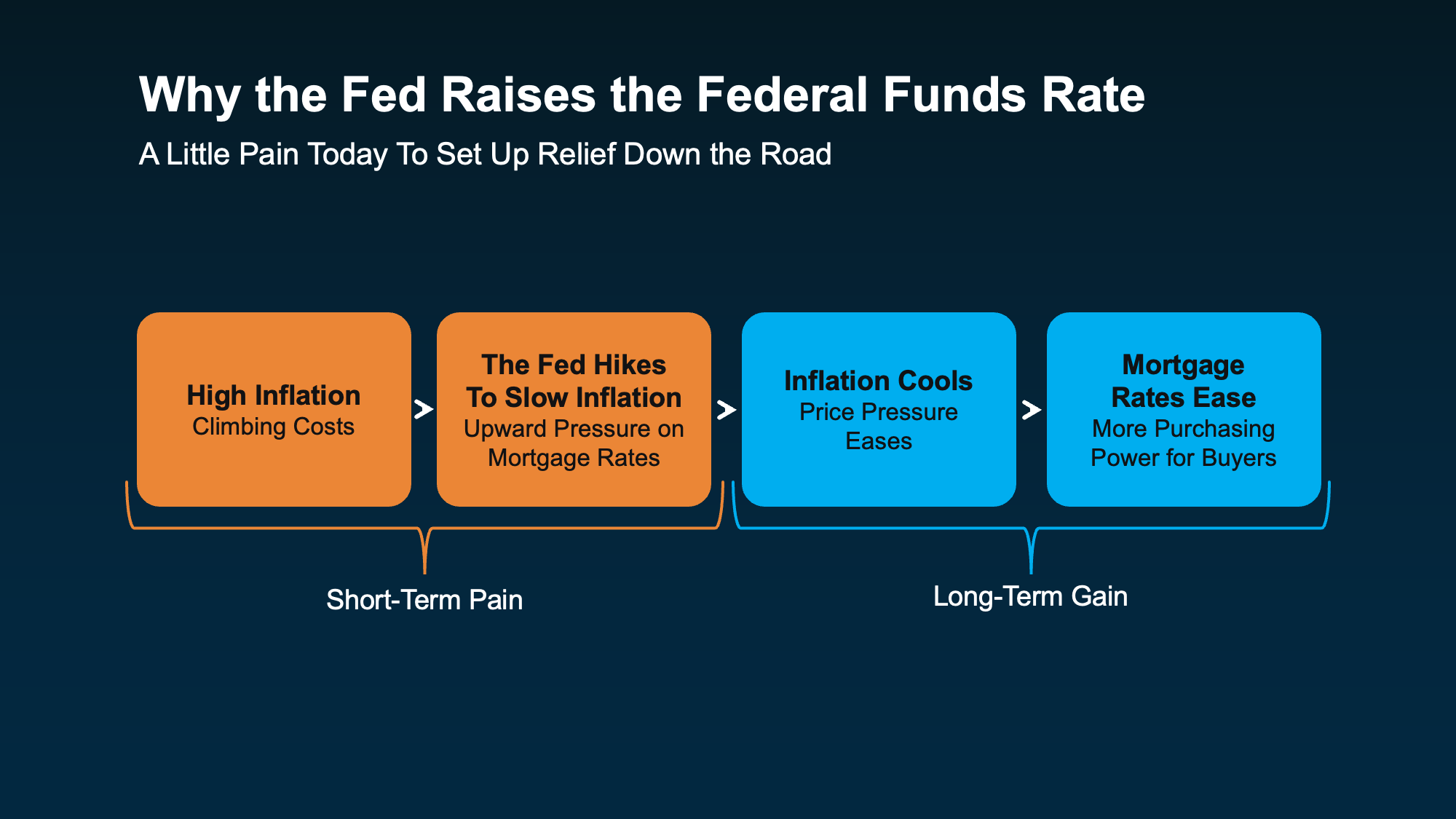
That is why the relationship between the Fed and mortgage rates is indirect.
The Fed can influence expectations.
But investors and the bond market ultimately play a major role in determining where longer-term interest rates go.
What Is Driving Mortgage Rates Right Now?
Right now, several forces are working at the same time.
Inflation remains above the Federal Reserve’s long-term target.
Energy prices and geopolitical uncertainty have also been putting pressure on inflation expectations and Treasury yields.
The ongoing conflict involving Iran has contributed to higher oil prices and volatility in global energy markets. When energy costs rise, investors can become more concerned about future inflation.
That can put upward pressure on Treasury yields.
And when Treasury yields rise, mortgage rates often rise with them.
This is a good example of why mortgage rates cannot be explained by the Federal Reserve alone.
A development thousands of miles away can affect oil prices.
Oil prices can affect inflation expectations.
Inflation expectations can move Treasury yields.
And Treasury yields can influence the mortgage rate a buyer sees in Lathrop.
What Does the 10-Year Treasury Have To Do With Mortgage Rates?
The 10-year Treasury is one of the most important indicators to watch if you want to understand mortgage rates.
Mortgage-backed securities compete with Treasury bonds for investor dollars.
If Treasury yields rise, mortgage investments generally need to offer investors a more attractive return too.
That can contribute to higher mortgage rates.
If Treasury yields fall, mortgage rates may eventually move lower.
It is not a perfect one-to-one relationship.
There is also a spread between Treasury yields and mortgage rates, along with other factors affecting mortgage-backed securities.
But historically, the 10-year Treasury and mortgage rates have moved in the same general direction.
Why Iran and Oil Prices Can Affect Mortgage Rates
At first, war in the Middle East and your mortgage payment may sound completely unrelated.
But the connection runs through inflation and bond markets.
Oil affects transportation, shipping, manufacturing, agriculture, airlines, and many other parts of the economy.
If oil prices rise sharply, investors may expect inflation to remain higher for longer.
That can push Treasury yields higher.
And higher Treasury yields can translate into higher mortgage rates.
This does not mean every change in oil prices immediately changes mortgage rates.
But it shows why global events matter.
Mortgage rates respond to a much bigger economic picture than Fed announcements alone.
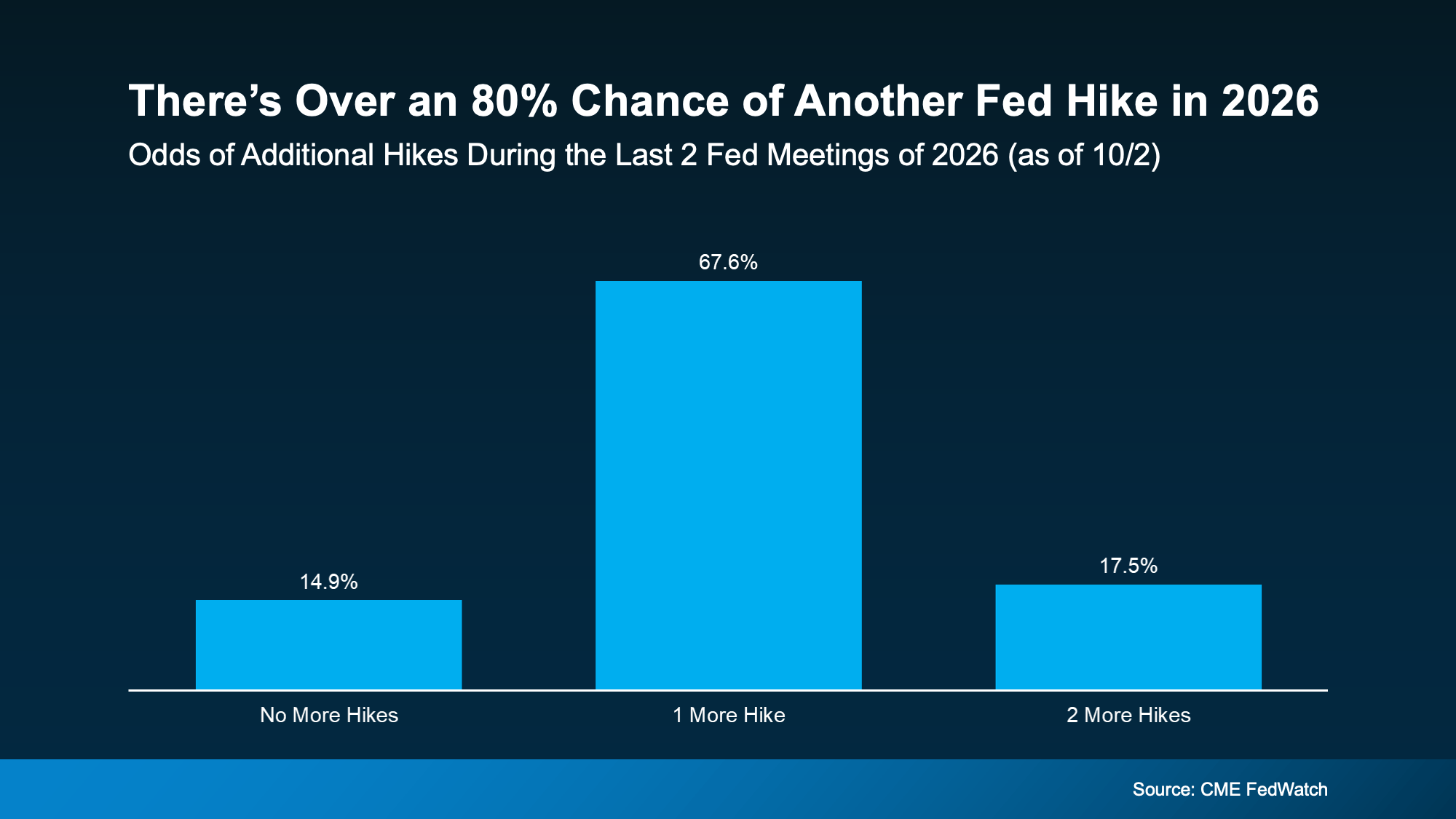
Is the Fed Likely To Raise Rates Again in 2026?
Another Federal Reserve rate increase remains possible.
Market expectations can change quickly as new inflation, employment, and economic reports are released.
That is why buyers should be careful about making a housing decision based on one FedWatch probability on one particular day.
Those probabilities can shift substantially from week to week.
Recent inflation data has kept the possibility of additional tightening alive.
The bigger takeaway is that the Federal Reserve is still trying to bring inflation sustainably closer to its 2% target.
Until investors become more confident that inflation is under control, mortgage rates may remain volatile.
What Does the Latest Inflation Data Show?
Inflation is giving the Federal Reserve mixed signals.
The latest official PCE inflation data available for August showed headline PCE inflation at 3.4% year over year.
Core PCE, which excludes food and energy and is closely watched by the Federal Reserve, was 3.0% year over year.
Those numbers remain above the Fed’s long-term 2% inflation target.
More recent September consumer-price data also showed renewed inflation pressure, particularly from energy costs.
That is why predicting exactly when mortgage rates will fall is so difficult.
Progress on inflation can happen.
Then another economic report or geopolitical development changes the outlook again.
For homebuyers, that means building a plan around a specific future mortgage rate can be risky.
Will Mortgage Rates Fall if the Fed Stops Raising Rates?
They could, but it is not guaranteed.
Mortgage rates may fall if markets become convinced that inflation is cooling, economic growth is slowing, and future Federal Reserve policy will become less restrictive.
But the Fed simply pausing does not automatically cause mortgage rates to fall.
Investors still have to consider:
-
inflation
-
economic growth
-
Treasury supply
-
employment
-
energy prices
-
geopolitical risk
-
mortgage-backed security demand
That is why mortgage rates sometimes move before the Fed acts.
Financial markets are forward-looking.
They are constantly trying to anticipate what will happen next.
Should Buyers Wait for the Fed Before Buying a Home?
Not necessarily.
If buying only works for you at a substantially lower mortgage rate, waiting may be the right financial decision.
But waiting solely because you expect a particular Fed announcement to cause mortgage rates to drop immediately is a much riskier strategy.
Instead, buyers should determine whether a purchase works based on today’s numbers.
For buyers in Lathrop and River Islands, that means looking at:
-
purchase price
-
down payment
-
mortgage rate
-
property taxes
-
insurance
-
HOA dues
-
Mello-Roos or special assessments where applicable
-
solar obligations
-
seller credits
-
available rate buydowns
-
total monthly payment
If the payment works today and the home fits your long-term needs, you can evaluate the opportunity based on what you actually know.
If rates improve later, refinancing may potentially become an option depending on market conditions, qualification, and costs.
But a future refinance should never be treated as guaranteed.
What Buyers Can Control Right Now
Buyers cannot control the Federal Reserve.
They cannot control inflation.
They cannot control oil prices or Treasury markets.
But there are several things buyers can control.
Get Pre-Approved Early
A current pre-approval gives you a much clearer picture of what you can afford at today’s rates.
Do this before becoming emotionally attached to a home.
Compare Loan Options
Different loan programs can produce different rates, payments, and upfront costs.
Talk with a qualified lender about the options available for your situation.
Ask About Rate Buydowns
A seller or builder may potentially contribute toward a mortgage rate buydown, subject to loan guidelines.
That can sometimes improve the buyer’s monthly payment more than a modest reduction in purchase price.
Watch Seller Motivation
Homes with longer days on market, price reductions, or motivated sellers may create opportunities to negotiate concessions.
Compare New Construction and Resale
Builders may offer financing incentives.
Resale sellers may offer credits or provide completed landscaping, upgrades, window coverings, owned solar, or other features that would cost money after buying a new home.
Compare the entire package.
What Higher Rates Mean for Lathrop Buyers
For buyers in Lathrop, CA, higher rates make monthly payment strategy especially important.
A home that fits comfortably at one interest rate may stretch the budget at another.
That means buyers should avoid shopping based only on purchase price.
Start with the payment.
Then work backward into the price range.
This also creates opportunities.
When affordability becomes more difficult, some buyers leave the market.
That may reduce competition.
Sellers may become more flexible.
Price reductions may appear.
Closing-cost credits may become more negotiable.
A difficult rate environment can create challenges and negotiating opportunities at the same time.
What Higher Rates Mean for River Islands Buyers
In River Islands, buyers should pay particularly close attention to the total monthly cost.
Depending on the property, that may include:
-
mortgage principal and interest
-
property taxes
-
Mello-Roos or special assessments
-
HOA dues where applicable
-
homeowners insurance
-
solar payments where applicable
-
utilities
-
ongoing maintenance
A builder advertising an attractive mortgage rate may initially look like the best deal.
But buyers should compare that against the full cost of the property.
A resale home may already have landscaping, window coverings, upgraded flooring, solar, or a finished backyard.
New construction may offer financing incentives.
Neither option automatically wins.
The comparison needs to be based on the complete financial picture.
What Does Fed Policy Mean for Home Sellers?
Sellers need to understand this issue too.
Higher mortgage rates reduce buyer purchasing power.
That can affect:
-
showing activity
-
buyer demand
-
days on market
-
negotiations
-
seller concessions
-
pricing
-
competition from builders
A buyer may love your house but still be constrained by the monthly payment.
That means sellers need to price for the buyers who exist today.
Not the buyers who existed when mortgage rates were much lower.
What Lathrop Sellers Should Do in a Higher-Rate Market
If you are selling in Lathrop, start by understanding what buyers are comparing your home against.
Look at:
-
active resale competition
-
recent closed sales
-
pending homes
-
price reductions
-
days on market
-
seller concessions
-
new construction
-
builder financing incentives
Then position your home accordingly.
That may mean adjusting price.
But it could also mean offering a closing-cost credit or mortgage rate buydown contribution.
Or it may mean highlighting advantages your property has that competing homes do not.
The right strategy depends on the home.
Why This Matters Even More in River Islands
River Islands sellers may be competing directly against builders.
Builders can sometimes advertise below-market financing through preferred lenders or other incentives.
A resale seller may not be able to duplicate every builder promotion.
But resale homes can have advantages that need to be communicated clearly.
Those may include:
-
premium location
-
lake or park views
-
completed landscaping
-
finished backyard
-
established improvements
-
window coverings
-
owned solar
-
upgraded interiors
-
no construction wait
-
immediate move-in readiness
The goal is not simply to beat the builder’s advertised rate.
The goal is to show the buyer the total value of your property.
Should Sellers Offer a Mortgage Rate Buydown?
It can be worth considering.
Depending on the buyer’s loan and transaction structure, a seller may be able to provide a credit that helps reduce the buyer’s mortgage rate.
For a payment-sensitive buyer, that can potentially be more attractive than reducing the sale price by the same dollar amount.
But it is not automatically the right strategy.
Seller net proceeds matter.
Loan guidelines matter.
The appraisal matters.
The buyer’s long-term plans matter.
An experienced agent and lender can compare the numbers before determining which structure makes the most sense.
Does a Fed Rate Hike Mean Home Prices Will Fall?
Not automatically.
Higher rates can reduce buyer affordability and demand.
But home prices are still determined by local supply and demand.
If an area has limited inventory and strong buyer demand, prices may remain relatively resilient even with higher mortgage rates.
If inventory is high and buyer demand is weak, sellers may face more pressure to adjust.
That is why national Fed headlines cannot tell you exactly what your Lathrop or River Islands home is worth.
Local market conditions still matter.
The Biggest Mortgage Rate Myth To Avoid
The biggest mistake is thinking:
“The Fed raised rates, so mortgage rates automatically went up.”
Or:
“The Fed cut rates, so mortgage rates should automatically go down.”
Neither statement is necessarily true.
Mortgage rates reflect expectations about the entire economy.
The Federal Reserve is an important part of that equation.
But it is not the entire equation.
Understanding that can help buyers and sellers make decisions based on real market conditions instead of reacting to headlines.
Bottom Line
The Federal Reserve does not directly set mortgage rates.
It sets the Federal Funds Rate, which can influence financial markets, Treasury yields, inflation expectations, and ultimately mortgage rates.
But mortgage rates are also affected by inflation, economic growth, investor demand, Treasury markets, global events, and other factors.
That is why rates can move even when the Fed does nothing.
And it is why waiting for one specific Fed decision is not necessarily a housing strategy.
For buyers and sellers in Lathrop, CA and River Islands, the better approach is to build a plan around the market that exists today.
If you are thinking about buying or selling, reach out. I can help you understand how today’s rates are affecting the local market, what buyers are actually paying, and what options may help make your next move work.
About the Author
David Torres is a Broker Associate at Real Broker serving Lathrop, CA and River Islands. He helps buyers and sellers understand mortgage-rate impacts, local market trends, home values, and real estate strategy so they can make confident decisions in changing market conditions.
Categories
Recent Posts