
Why So Many Sellers Are Cutting Their Price Right Now in Lathrop

By David Torres | Broker Associate, Real Broker
Price cuts are showing up everywhere right now.
And depending on which side of the transaction you are on, they can mean very different things.
If you are selling, seeing homes reduce their price can make you wonder whether you will have to accept less than you hoped.
If you are buying, a price cut can make you wonder whether something is wrong with the house.
But in many cases, neither assumption tells the whole story.
What is really happening is simpler:
The market has changed, and sellers are adjusting to where buyers actually are today.
Mortgage rates are still affecting affordability. Buyers have more homes to choose from in many markets. And when buyers have options, overpriced homes are easier to skip.
That is why pricing matters more now.
For homeowners and buyers in Lathrop, CA and River Islands, the important thing is not simply whether a home has had a price reduction.
It is understanding why it happened and what that means for your strategy.

Why Are So Many Sellers Cutting Their Price Right Now?
Sellers are cutting prices because buyers have more choices, mortgage rates are still affecting monthly payments, and homes that are priced above current market expectations are having a harder time attracting offers.
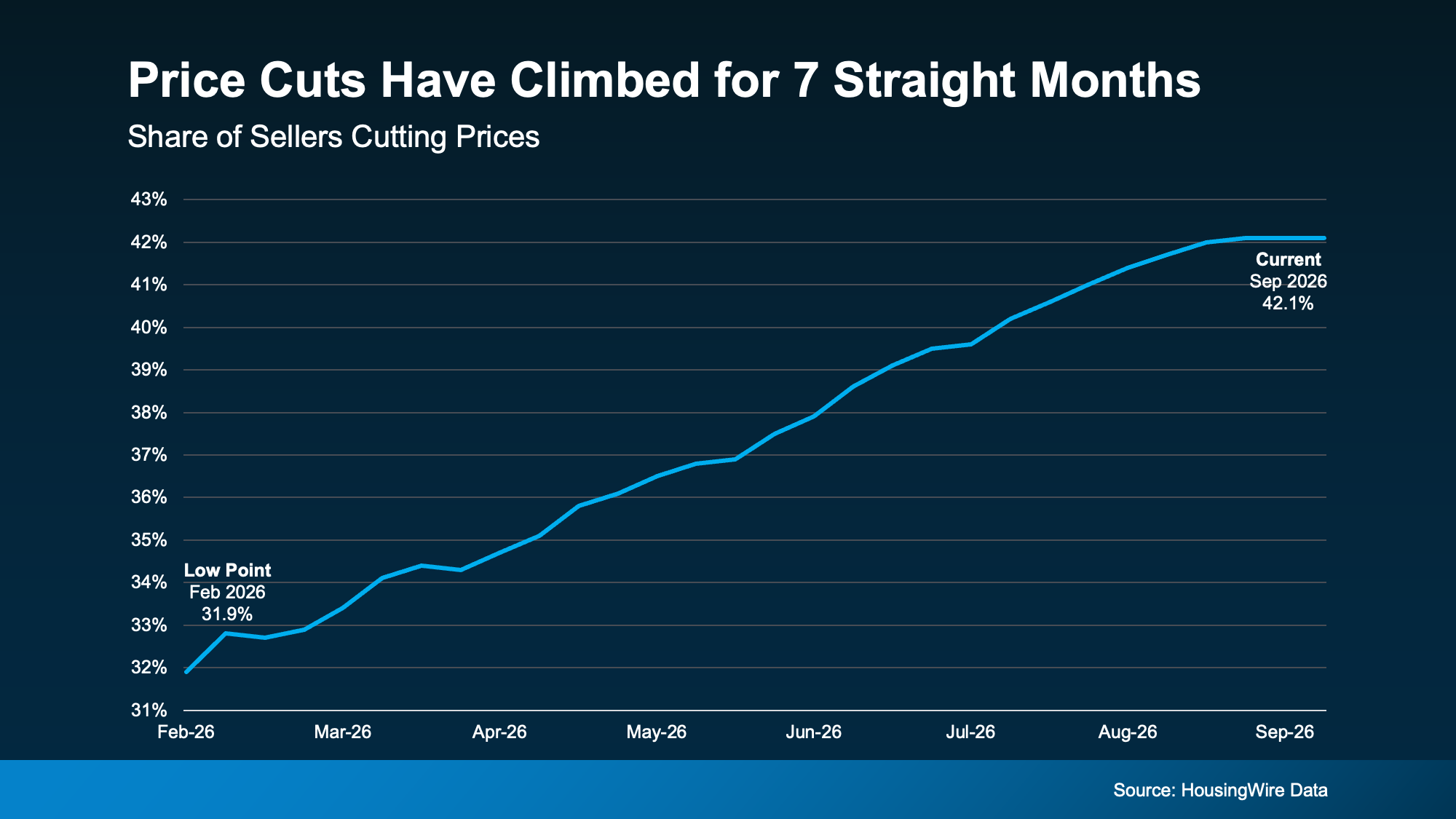
According to HousingWire Data, more than 42% of active listings have had at least one price reduction, and the typical seller is cutting approximately $17,560 from the original asking price.
That does not automatically mean something is wrong with those homes.
In many cases, sellers are simply adjusting to what buyers are willing and able to pay in today’s market.
42% of Homes for Sale Have Had a Price Cut
Price reductions have been rising steadily.
According to HousingWire Data, the share of sellers cutting their asking price has increased for seven straight months.
Today, more than 4 out of 10 active listings have had at least one price reduction.
And the typical seller is reducing the original asking price by about $17,560.
That is a meaningful number.
But it does not mean home values are suddenly collapsing.
It means many sellers started at a price buyers were not responding to.
And when showings or offers do not materialize, sellers eventually have to decide whether to keep waiting or adjust.
More sellers are choosing to adjust.
Why Buyers Have More Influence Over Pricing Today
Affordability is still one of the biggest challenges in the housing market.
Buyers are looking closely at:
-
purchase price
-
mortgage rate
-
monthly payment
-
property taxes
-
homeowners insurance
-
HOA dues
-
special assessments
-
repair costs
-
utility costs
-
total cash needed to close
That means buyers can only stretch so far.
At the same time, there are more homes available in many areas.
When buyers have more choices, they do not have to chase every listing.
If one home feels overpriced, they can look at another.
That creates pressure on sellers to price more accurately.
During the most competitive years, sellers could sometimes list aggressively and still attract buyers.
Today, the market may not forgive that strategy as easily.
What Does a Price Cut Mean for Sellers?
If you are selling, a price reduction is not automatically a failure.
Sometimes the market changes after the home is listed.
New competition may come on the market.
Another home may reduce its price.
Buyer demand may shift.
Interest rates may move.
A property that was reasonably positioned several weeks ago may suddenly look expensive compared to newer listings.
That is why sellers need to keep monitoring the market after the home goes live.
If your home is no longer aligned with current competition, adjusting the price may help bring buyers back.
The key is recognizing the problem early.
The longer a property sits without meaningful activity, the more difficult it can become to regain momentum.
Why Pricing Correctly From Day One Matters
The strongest strategy is usually to avoid chasing the market in the first place.
When a home first goes live, it gets the most attention.
Buyers who have been waiting for something in that price range see it.
Agents see it.
Online platforms push the new listing.
That initial exposure matters.
If buyers immediately see the home as overpriced, they may skip it.
Then the seller loses valuable early momentum.
That is why pricing correctly from day one is so important.
The goal is not to underprice the home.
The goal is to position it where buyers see the value.
What This Means for Sellers in Lathrop
For sellers in Lathrop, CA, pricing should be based on current local competition, not simply on what a neighbor sold for months ago.
The market can change quickly.
Before listing, sellers should look at:
-
recent comparable sales
-
current active listings
-
pending homes
-
recent price reductions
-
days on market
-
buyer activity
-
condition
-
location
-
upgrades
-
competing new construction
That final point matters in Lathrop.
Depending on the area and price range, a buyer may be comparing a resale home with newer construction.
That means sellers need to understand not only what other resale homes are doing, but what builders may be offering too.
What River Islands Sellers Should Pay Attention To
In River Islands, homes can vary significantly based on:
-
builder
-
floor plan
-
lot size
-
lake or park location
-
landscaping
-
upgrades
-
solar structure
-
age
-
condition
-
proximity to amenities
Two homes with similar square footage can still have very different values.
That is why pricing a River Islands home using a broad price-per-square-foot number can be misleading.
A premium lot may matter.
A lake location may matter.
Owned solar may matter.
Completed landscaping may matter.
Upgrades may matter.
But buyers will still compare your home against everything else available.
If the price gets too far ahead of the competition, buyers may simply move on.
Why Sellers Are Adjusting Faster Than Before
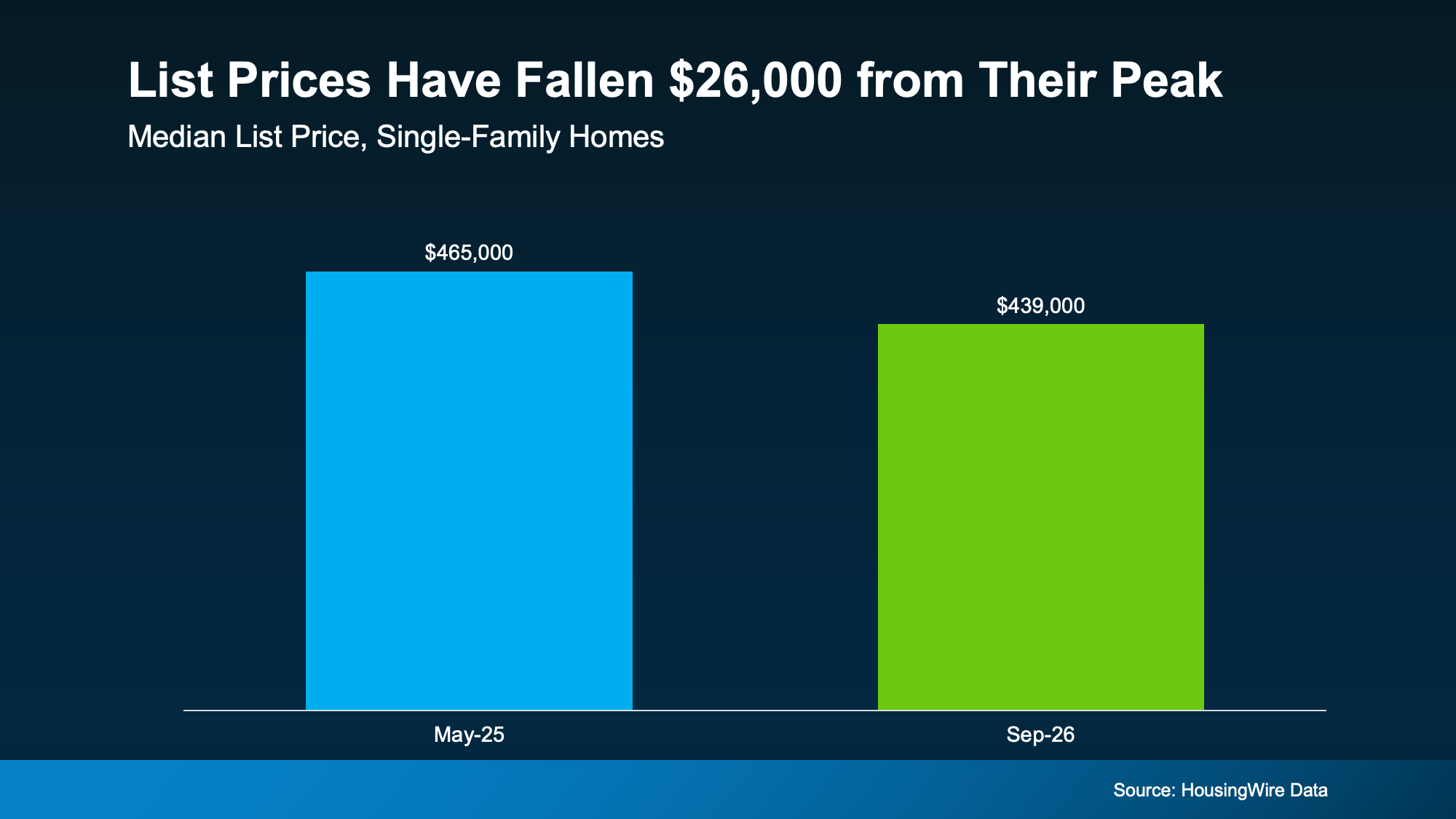
HousingWire Data also shows that national list prices are trending down.
List prices have fallen about $26,000 from last year’s peak.
Some of that decline is seasonal.
List prices often soften as the market moves into fall and winter, then begin rising again as spring approaches.
But seasonality is not the whole story.
Sellers are also getting more realistic about what buyers can afford.
Rather than listing high and waiting for buyers to come up, more sellers are trying to meet the market sooner.
Jake Krimmel, Senior Economist at Realtor.com, explains that lower asking prices and additional negotiating room can benefit buyers, while sellers who price according to current demand have a better chance of keeping transactions moving in a higher-rate environment.
That is an important point.
Pricing realistically is not just good for buyers.
It can be good for sellers too.
Why Chasing the Market Can Cost Sellers
One of the biggest mistakes sellers can make is reacting too slowly.
Imagine listing at $750,000 when the market is really closer to $725,000.
Buyers compare the home and decide it is overpriced.
A few weeks pass.
Then another similar home comes on at $720,000.
Now the original listing looks even more expensive.
The seller eventually reduces to $735,000.
But buyers may still see the newer listing as the better value.
So the seller reduces again.
That is what people mean when they say a seller is chasing the market.
The home keeps adjusting after the market has already moved.
Pricing closer to market value from the beginning can help avoid that problem.
Does a Price Cut Mean Something Is Wrong With the House?
Not necessarily.
A price reduction can happen for many reasons.
The seller may have started too high.
Buyer demand may have shifted.
New competition may have appeared.
The seller may have become more motivated.
The home may have been listed during a changing market.
A price cut should not automatically be interpreted as a property defect.
For buyers, the better approach is to investigate the home, review comparable sales, understand how long it has been listed, and determine why the price changed.
Sometimes a reduction is simply the seller catching up to the market.
Buyers Have More Room To Negotiate Again
Another important shift is the balance between buyers and sellers.
According to Redfin, sellers now outnumber buyers nationally by about 58%, the widest gap on record.
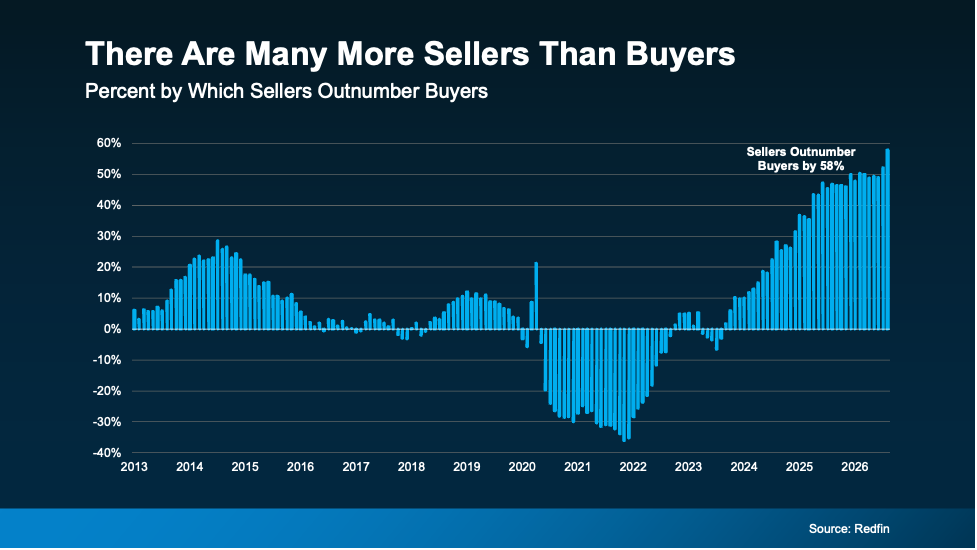
That changes the negotiation environment.
Nationally, about 7 in 10 markets now favor buyers or are trending in that direction.
Again, that does not mean every local market behaves the same way.
But it does show why buyers have more negotiating power in many parts of the country.
When sellers are competing for fewer buyers, buyers may have more room to ask for favorable terms.
What Can Buyers Negotiate Right Now?
Depending on the home and the seller’s motivation, buyers may be able to negotiate:
-
a lower purchase price
-
seller-paid closing costs
-
repairs after inspection
-
rate buydown credits
-
flexible closing dates
-
home warranty coverage
-
credits in place of repairs
-
other transaction terms
The best opportunities are often homes that have been sitting longer.
A seller who listed yesterday may not be very flexible.
A seller whose home has been on the market for six weeks with limited activity may think differently.
That is why days on market matter.
Are Price Cuts Good for Buyers?
Price cuts can create opportunities for buyers because they may signal that a seller is becoming more realistic or more motivated.
A buyer may be able to purchase the home at a lower price or negotiate additional concessions.
But buyers should still evaluate the property carefully.
A price reduction does not automatically make a home a good deal.
You still need to compare:
-
recent sales
-
condition
-
neighborhood
-
upgrades
-
total monthly payment
-
repair needs
-
competition
-
long-term fit
The goal is not simply to buy something because it has been reduced.
The goal is to identify where the reduced price creates genuine value.
What Lathrop Buyers Should Look For
For buyers in Lathrop, price reductions can be useful signals.
Pay attention to homes with:
-
multiple reductions
-
longer days on market
-
recent relisting activity
-
nearby competing listings
-
vacant status
-
failed previous contracts
-
aggressive original pricing
-
competition from builders
Those situations may create opportunities.
But every property needs to be evaluated individually.
A home that has been reduced $20,000 may still be overpriced.
Another home with no price reduction may already be positioned correctly and represent the better value.
That is where local market knowledge matters.
What River Islands Buyers Should Compare
For buyers in River Islands, list price alone is not enough.
Compare the total package.
That includes:
-
lot location
-
square footage
-
builder
-
floor plan
-
condition
-
upgrades
-
landscaping
-
solar
-
lake or park access
-
HOA considerations
-
special assessments
-
new construction incentives
-
resale competition
A reduced price can be attractive.
But a slightly more expensive home may still offer better overall value if it includes substantial upgrades, owned solar, completed landscaping, or a stronger lot.
The numbers need context.
Why Seller Flexibility Matters More Now
Pricing is only one part of the negotiation.
A seller may be unwilling to reduce another $10,000 but willing to offer a closing cost credit.
Another seller may agree to repairs.
Another may be flexible on timing.
For buyers, this creates more ways to structure a deal.
For sellers, it means flexibility can make your home more competitive.
The question should not always be:
“How much lower will the seller go?”
Sometimes the better question is:
What combination of price and terms creates the best deal?
Should Sellers Offer Closing Cost Credits Instead of Cutting the Price?
Sometimes.
A seller credit can help buyers with closing costs or potentially help fund a mortgage rate buydown, depending on the buyer’s loan program and lender guidelines.
For payment-sensitive buyers, that may be more valuable than a small reduction in purchase price.
But it depends on the situation.
The seller’s net proceeds matter.
The buyer’s financing matters.
The appraisal matters.
And lender limits on concessions matter.
This is why price and concessions should be evaluated together rather than separately.
Is the Housing Market Becoming a Buyer’s Market?
Nationally, buyers have gained more leverage as inventory has increased and sellers have outnumbered buyers.
But housing markets are local.
A market can favor buyers overall while a specific neighborhood or property type still receives strong demand.
The same is true in reverse.
A slower market can still have individual homes that sell quickly because they are priced correctly and highly desirable.
For buyers and sellers in Lathrop and River Islands, the most useful question is not whether the entire country is in a buyer’s market.
It is:
What is happening with homes like this one, in this neighborhood, at this price point?
That is the information that should drive the strategy.
What Should Sellers Do Before Reducing Their Price?
Before reducing the price, a seller should review:
-
showing activity
-
buyer feedback
-
online engagement
-
competing listings
-
recent pending sales
-
recent closed sales
-
new price reductions nearby
-
days on market
-
property condition
-
marketing quality
If the home is getting showings but no offers, price may be part of the problem.
If the home is getting almost no showings, the market may be saying the price is too high before buyers ever walk through the door.
But pricing is not the only possibility.
Poor photos, limited showing availability, condition issues, or weak marketing can also reduce activity.
That is why sellers should diagnose the problem before making a change.
What Should Buyers Do When They See a Price Reduction?
Do not automatically assume something is wrong.
Instead, ask:
-
How long has the home been listed?
-
How many times has the price changed?
-
What did comparable homes actually sell for?
-
Why did the seller reduce the price?
-
Are there known condition issues?
-
Has the property fallen out of contract?
-
Is the seller offering concessions?
-
How much competition is there?
-
What would make a reasonable offer?
A price reduction can be an invitation to take a second look.
Sometimes a home that did not make sense at the original price becomes much more attractive after an adjustment.
Bottom Line
Price cuts are a normal part of today’s housing market.
According to HousingWire Data, more than 42% of active listings have had at least one price cut, and the typical seller is reducing their original asking price by about $17,560.
National list prices are also down about $26,000 from last year’s peak, while Redfin reports sellers now outnumber buyers by roughly 58% nationally.
Those trends are giving buyers more room to negotiate and putting more pressure on sellers to price accurately.
For sellers in Lathrop, CA and River Islands, that means pricing correctly from the beginning and responding quickly when the market gives you feedback.
For buyers, it means a price reduction does not necessarily signal a problem. It may simply mean the seller is adjusting to today’s market.
If you are thinking about selling or buying in Lathrop or River Islands, reach out. I can help you look at what homes are actually selling for, where price reductions are happening, and how much negotiating room may exist in your specific part of the market.
About the Author
David Torres is a Broker Associate at Real Broker serving Lathrop, CA and River Islands. He helps buyers and sellers understand local pricing trends, home values, negotiation strategy, and market conditions so they can make confident real estate decisions.
Categories
Recent Posts